Marta Adalid (Madrid, 1994) is a Spanish visual artist whose painting practice explores the relationship between the body and the natural environment.
Working from sensation, memory, and embodied experience, her paintings develop in an intermediate space where forms remain open and in transformation. Organic and vegetal elements frequently emerge, dissolving the boundaries between skin, landscape, and matter, and suggesting a continuity between human and non-human forms.
Her work is rooted in an interest in how the world affects us and leaves traces on the body, understood as a surface of contact where experience is registered and transformed. Through an intuitive and process-based approach, she constructs ambiguous visual languages that move between appearance and dissolution, inviting a sensory rather than narrative engagement.
She has presented her work in various exhibitions, including the solo exhibition Niku no Hana (Flower of Flesh) in Tokyo (2026), developed in collaboration with Katsuya Susuki Gallery and LEA – Lab of Experimental Art, with the support of the Embassy of Spain in Japan. She was awarded an INJUVE grant (2024–2025) for the project Habitar el cuerpo colectivo.
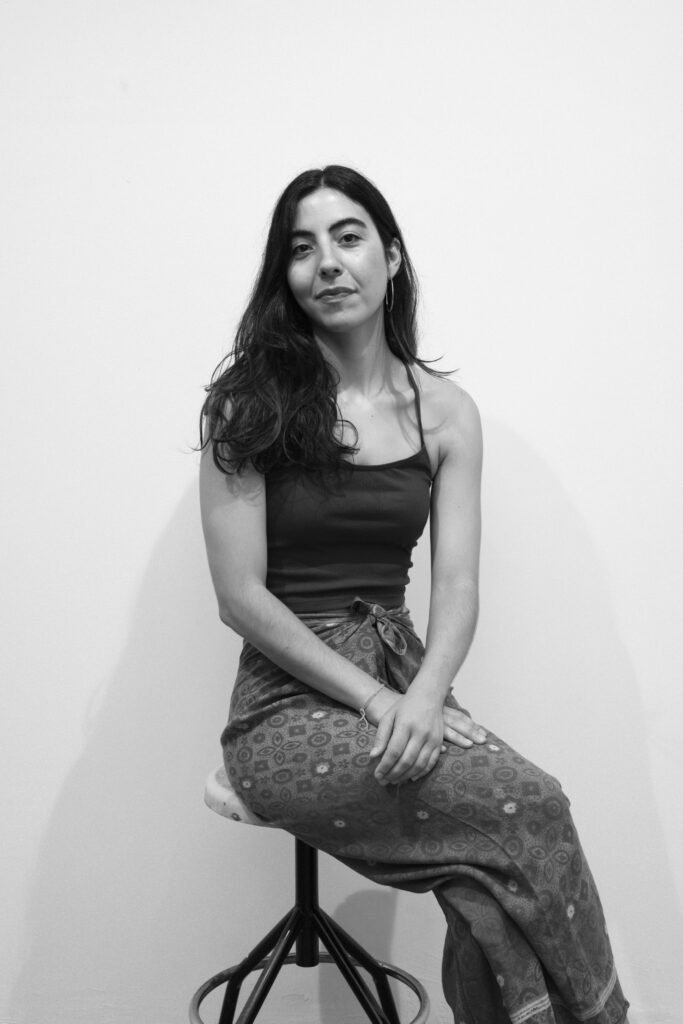
Marta Adalid (Madrid, 1994) es una artista visual española cuya práctica pictórica explora la relación entre el cuerpo y el entorno natural.
Partiendo de la sensación, la memoria y la experiencia encarnada, sus pinturas se desarrollan en un espacio intermedio donde las formas permanecen abiertas y en transformación. Elementos orgánicos y vegetales emergen con frecuencia, disolviendo los límites entre piel, paisaje y materia, y sugiriendo una continuidad entre formas humanas y no humanas.
Su trabajo se fundamenta en un interés por cómo el mundo nos afecta y deja huellas en el cuerpo, entendido como una superficie de contacto donde la experiencia se registra y se transforma. A través de un enfoque intuitivo y basado en el proceso, construye lenguajes visuales ambiguos que se mueven entre la aparición y la disolución, invitando a una experiencia sensorial más que narrativa.
Ha presentado su obra en diversas exposiciones, entre ellas la muestra individual Niku no Hana (Flor de carne) en Tokio (2026), desarrollada en colaboración con Katsuya Susuki Gallery y LEA – Laboratorio de Arte Experimental, con el apoyo de la Embajada de España en Japón. Además ha sido beneficiaria de la beca INJUVE (2024–2025) con el proyecto Habitar el cuerpo colectivo expuesto en la Sala Amadís en la exposición Dulzuras indómitas (2025)