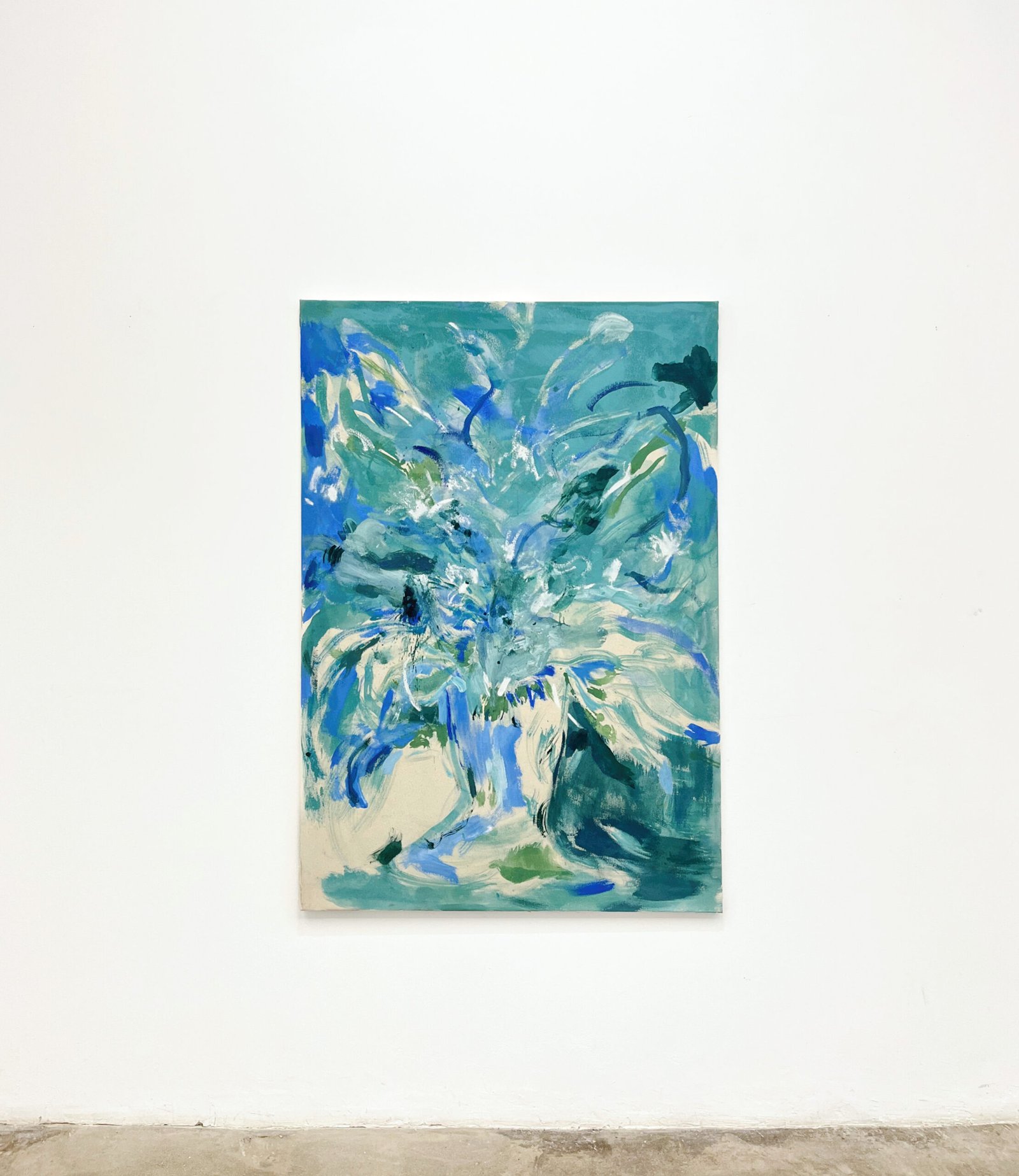
Habitar el cuerpo colectivo is a painting based project that emerges from the desire to establish a more intimate relationship with the surrounding world. Through painting, it explores ways of inhabiting the present grounded in attention, sensitivity, and connection to living systems.
In a context shaped by acceleration and fatigue, the project positions itself as a form of gentle resistance: a practice of slowing down, listening, and reactivating a more open and permeable perception of the environment.
The notion of a collective body frames the work as a continuity between the human body and nature. Rather than simply acknowledging our belonging to the natural world, it proposes understanding ourselves as part of an interdependent system shaped by mutual influence. Nature thus appears as an extension of our existence: both refuge and untamed force.
The project unfolds through a parallel between inhabiting the world, the canvas, and space itself. Each painting operates as an organism, and the body of work as an expanded body: a constellation of images where the intimate and the shared intersect. Vegetal elements—stems, shoots, flowers—act as presences that expand perception and activate a sensory experience.
From this perspective, the project suggests a shift from the individual toward the collective, questioning how we inhabit shared space and what forms of relation emerge when we understand ourselves as part of the same body.
Habitar el cuerpo colectivo es un proyecto pictórico que surge del deseo de establecer una relación más íntima con el mundo. A través de la pintura, propone imaginar formas de habitar el presente desde la atención, la sensibilidad y el vínculo con lo vivo.
En un contexto marcado por la aceleración y la fatiga, el proyecto se plantea como un espacio de resistencia suave: una práctica de desaceleración, escucha y apertura perceptiva hacia el entorno.
La noción de cuerpo colectivo articula el trabajo como una continuidad entre el cuerpo humano y la naturaleza. Más que reconocernos como parte de lo natural, plantea comprendernos como un sistema interdependiente que se afecta mutuamente. La naturaleza aparece así como extensión de nuestra existencia: refugio y fuerza indomable.
El proyecto se desarrolla mediante un paralelismo entre habitar el mundo, el cuadro y el espacio. Cada pintura funciona como un organismo, y el conjunto como un cuerpo expandido: una constelación de imágenes donde lo íntimo y lo común se entrelazan. Elementos vegetales —tallos, brotes, flores— actúan como presencias que amplían la percepción y activan una experiencia sensorial.
Desde esta perspectiva, el proyecto propone un desplazamiento de lo individual hacia lo compartido, cuestionando cómo habitamos el espacio común y qué formas de relación emergen al entendernos como parte de un mismo cuerpo.
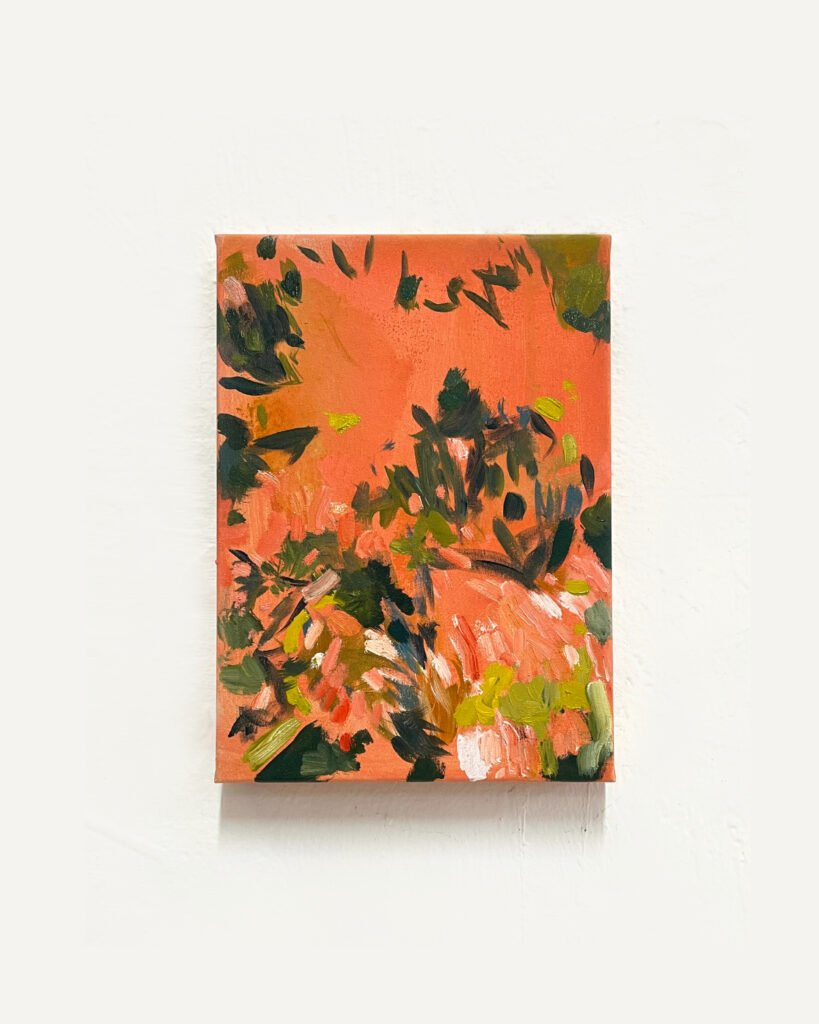
Oil and acrylic on canvas
22 x 30 cm
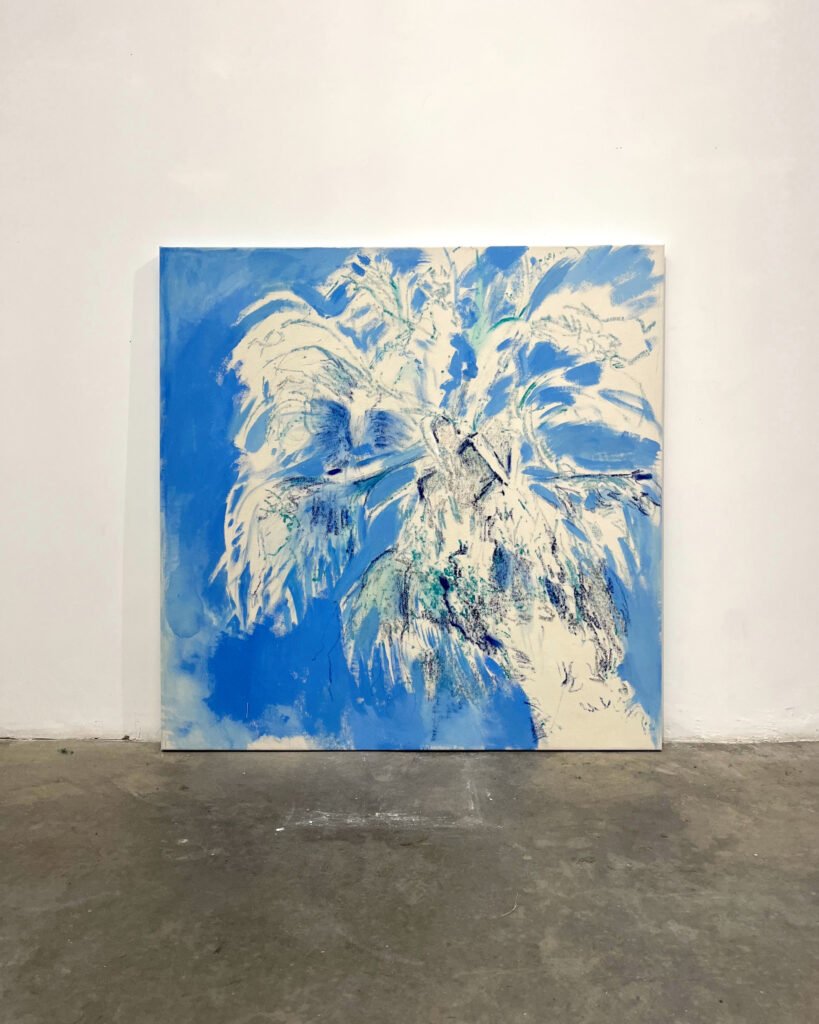
Mixed media on canvas
120 x 120 cm
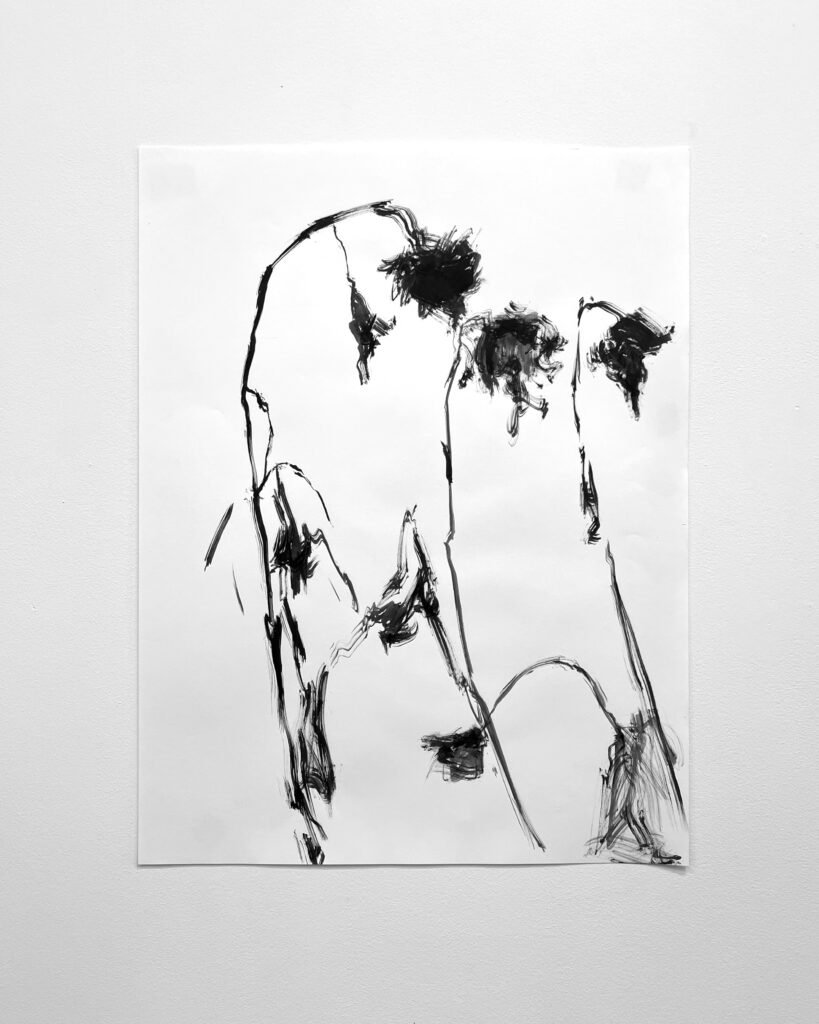
Black ink on paper
50 x 70 cm
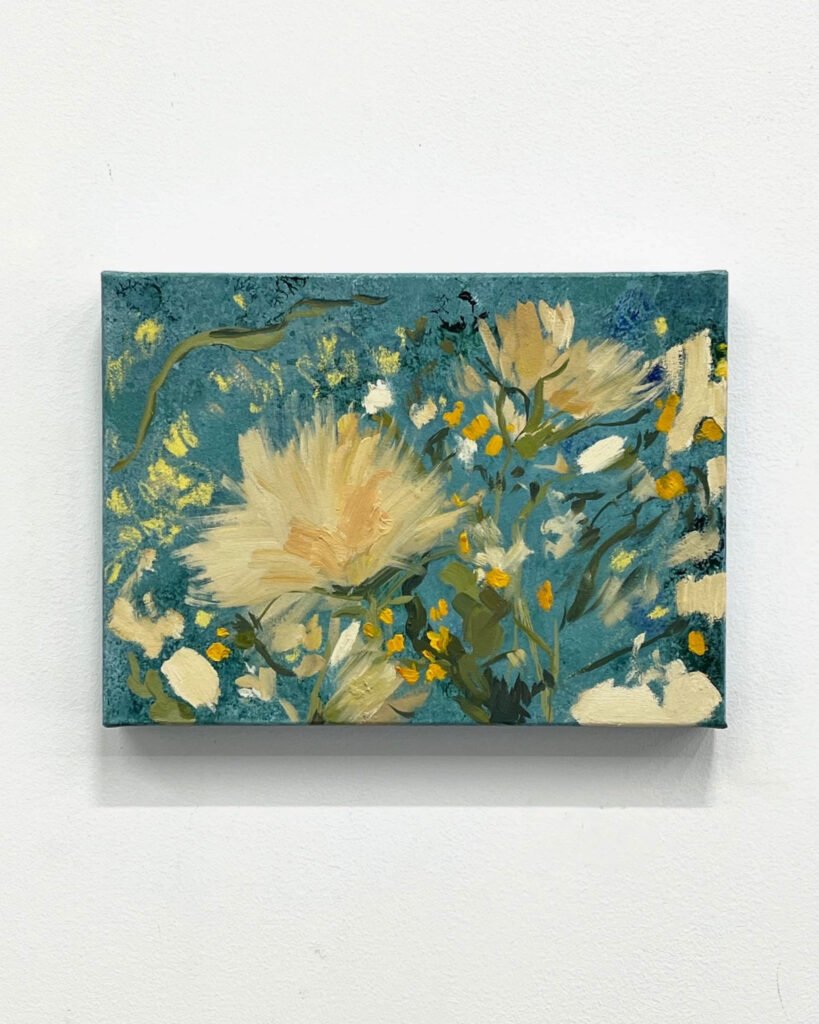
Mixed media on canvas
30 x 22 cm
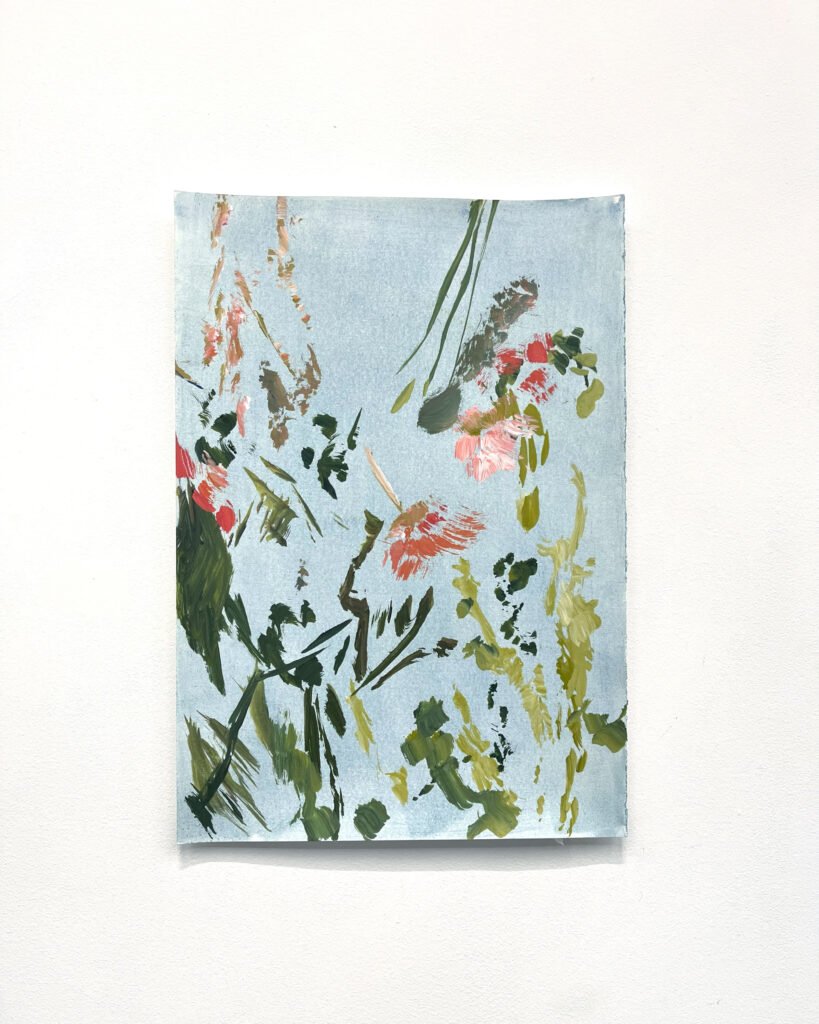
Acrylic and watercolor on paper
35 x 50 cm
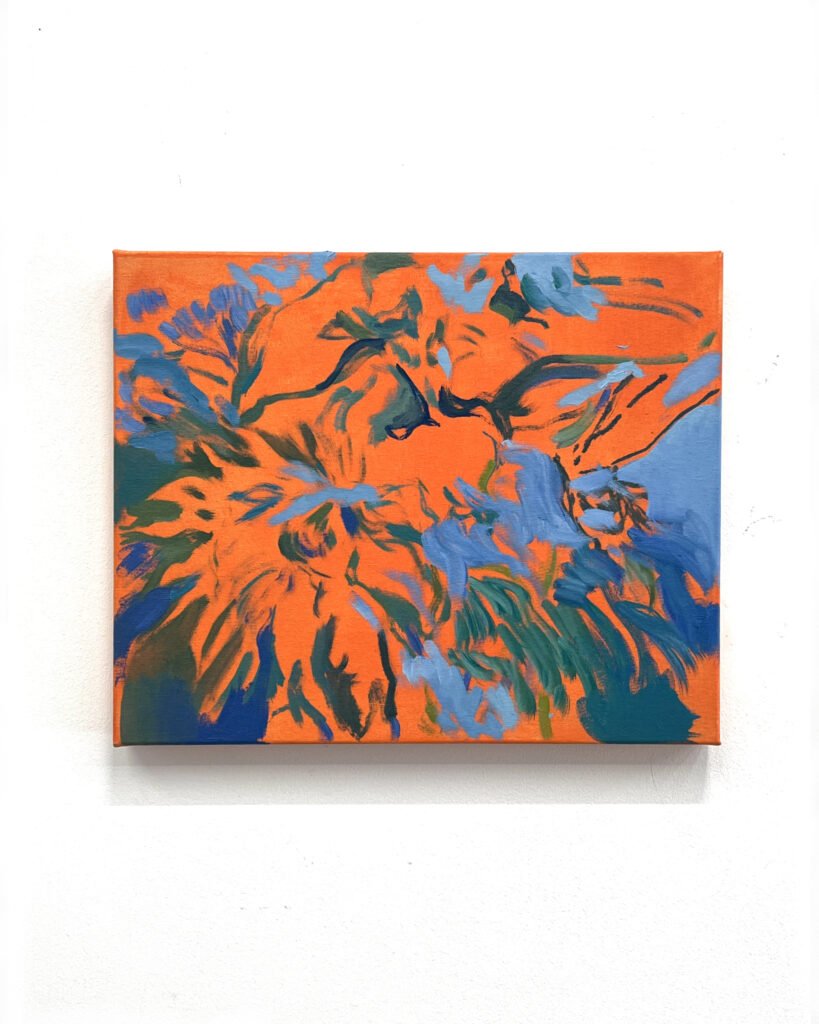
Mixed media on canvas
40 x 30 cm
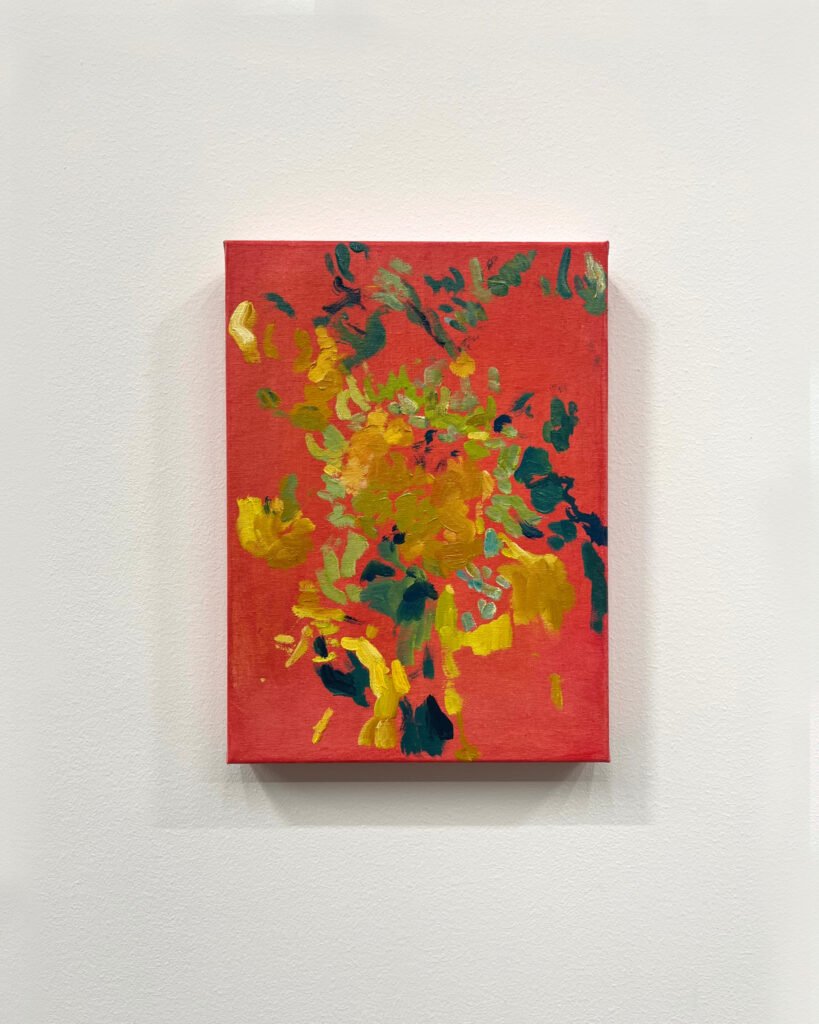
Oil and acrylic on canvas
22 x 30 cm
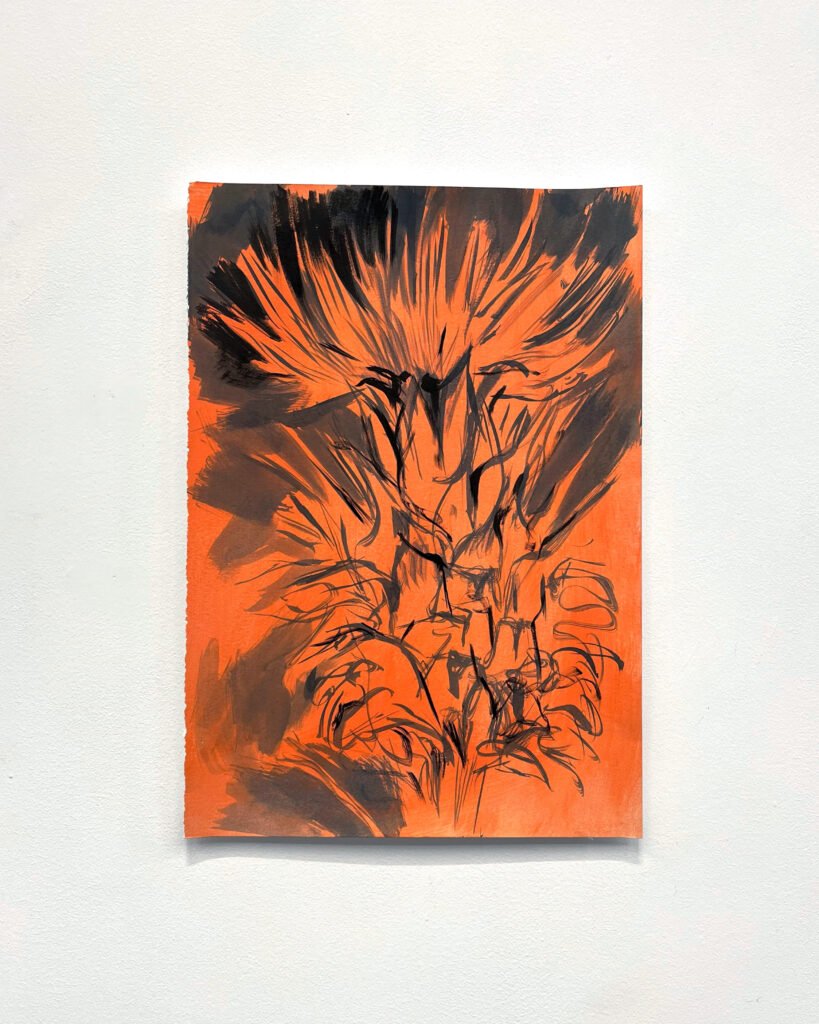
Watercolor and black ink on paper
35 x 50 cm
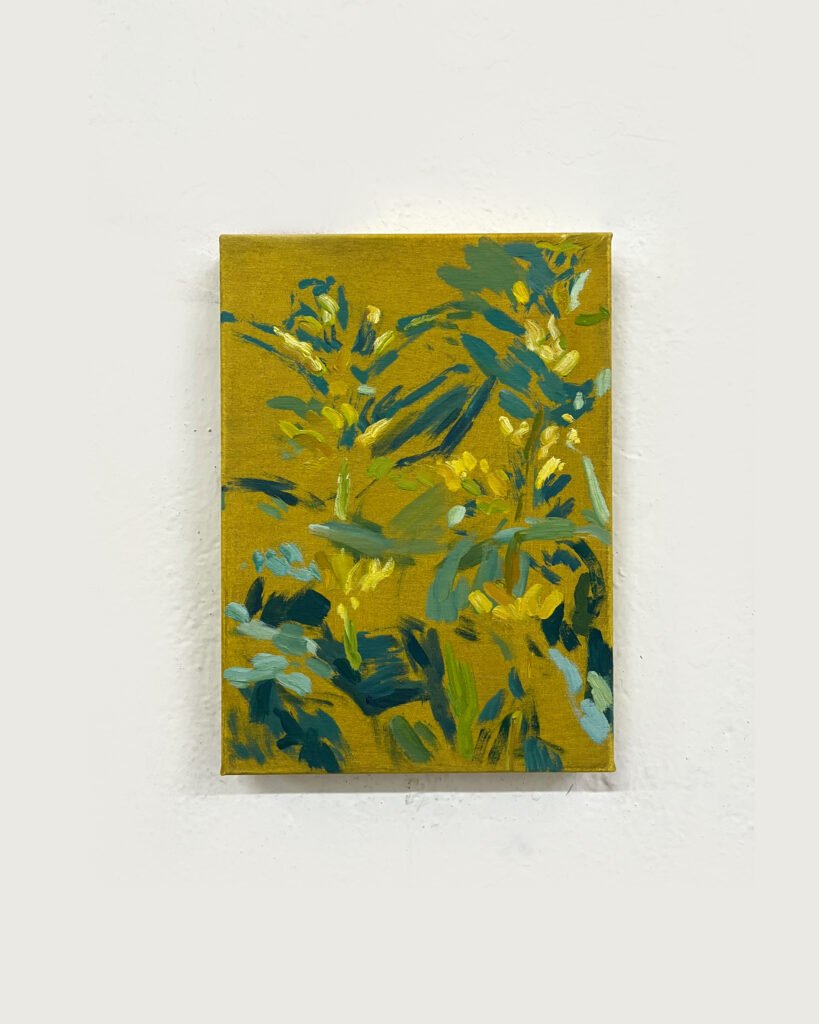
Oil and acrylic on canvas
22 x 30 cm
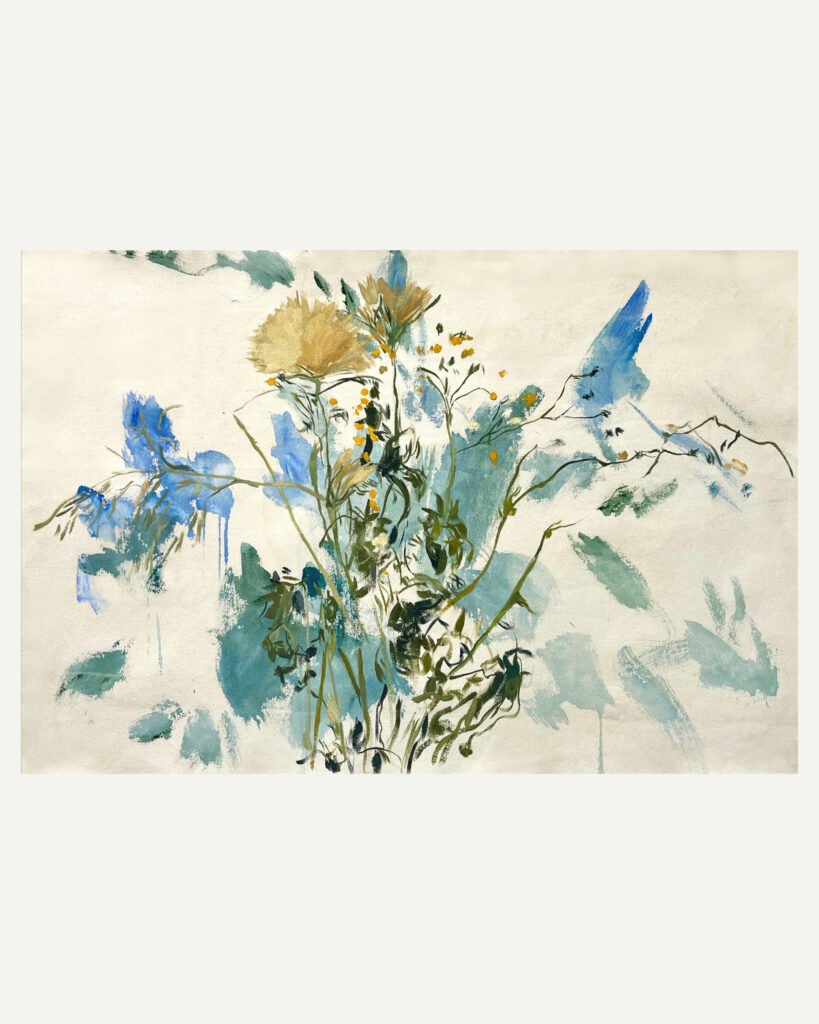
Oil and acrylic on textile
97 x 65 cm
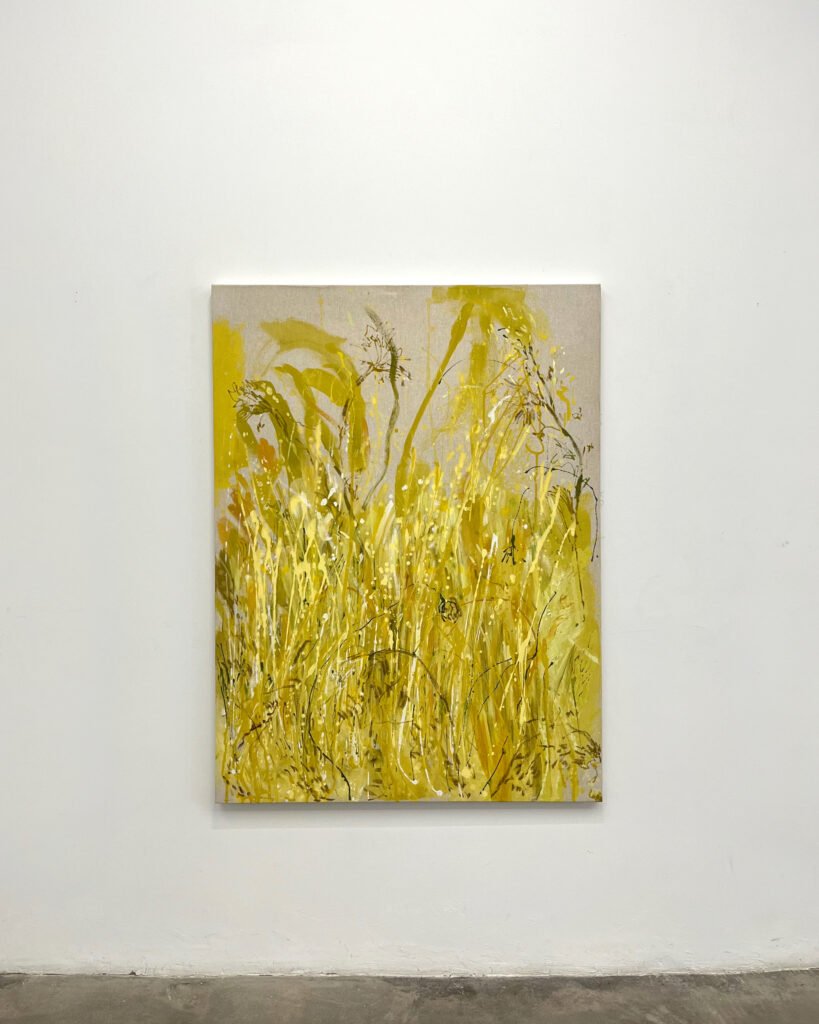
Mixed media on canvas
97 x 130 cm
Metrópolis, RTVE, Injuve 2026
(4:30)
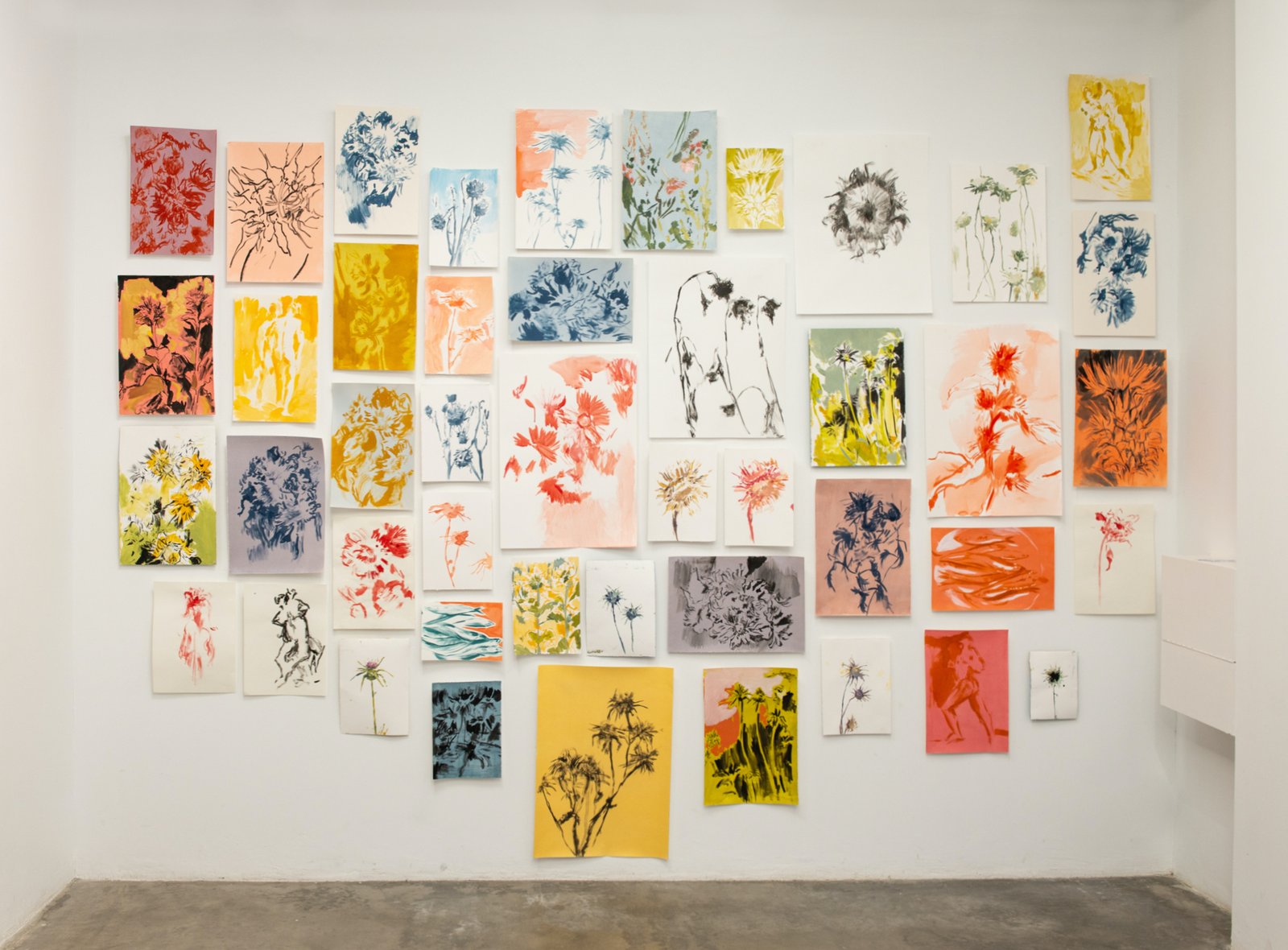
Residency exhibition, LEA (Lab of Experimental Art), 2025
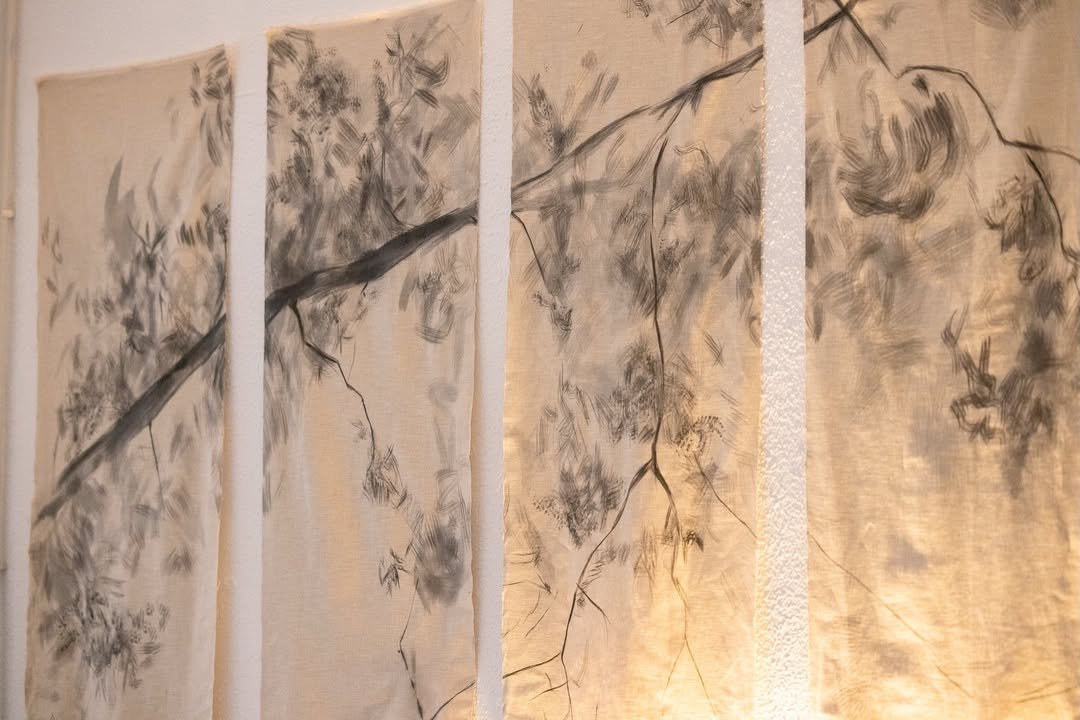
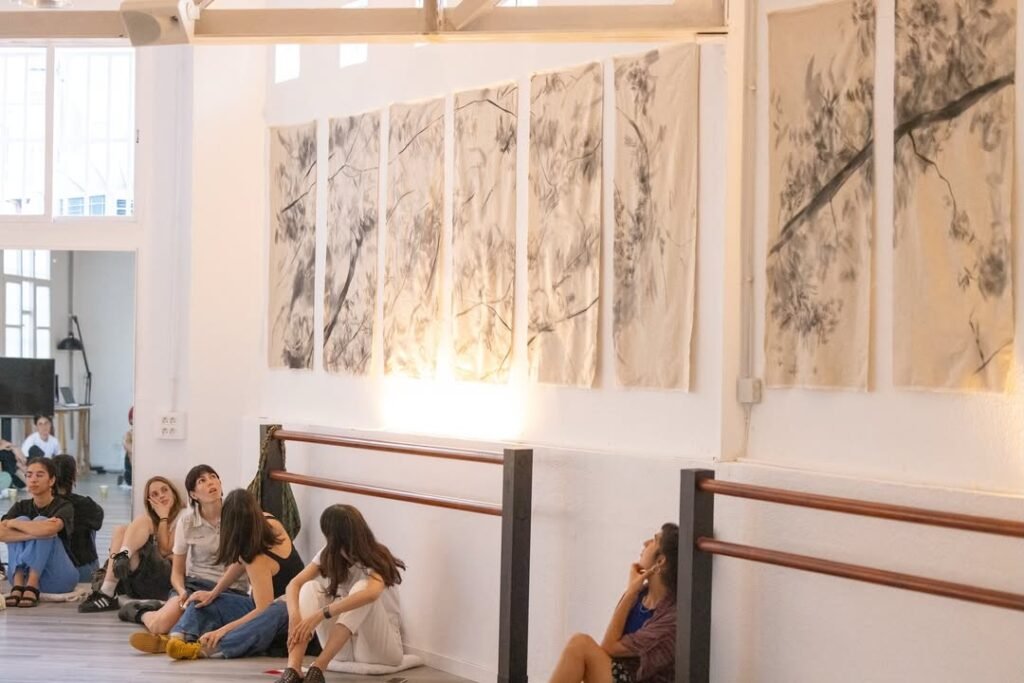
Photo by Juan Miguel Ponce
10 Sentidos Festival. Naturaleza Viva Vol. 02
Valencia, Spain · 2026
Habitar el cuerpo colectivo was selected for the Professional Programme of the 2026 10 Sentidos Festival as part of Naturaleza Viva Vol. 02. Celebrating its fifteenth anniversary, the festival focused on the relationship between art, ecology and collective responsibility, positioning the live arts as a space for imagining new ways of inhabiting the world.
The installation presents an arboreal landscape seen from below. As the viewer looks up towards the tree canopy, the interlacing branches envelop the field of vision, creating an immersive experience in which perception expands and dissolves into the continuity of the forest.
This work is part of an ongoing investigation that runs throughout my artistic practice. Although each piece exists as an autonomous work, they all belong to the same mental landscape: a continuous and inexhaustible territory where the individual and nature are no longer understood as separate entities. The landscape emerges as an extension of the body, reminding us that we are made of the same matter and share the same condition.
This sense of continuity is expressed through the large-scale format and the use of unstretched canvas. The lightness of the material introduces a feeling of suspension and expanded time, standing in contrast to the accelerated pace and fragmentation that define contemporary experience.
At the same time, the landscape is divided into separate sections, disrupting the linearity of the composition and suggesting that every fragment of the environment we perceive belongs to a greater whole. The installation invites viewers to reflect on our place within the natural world and to re-establish a relationship of attentiveness, reciprocity and attunement with nature.
Festival 10 Sentidos. Naturaleza Viva Vol. 02
Valencia, España · 2026
Habitar el cuerpo colectivo fue uno de los proyectos seleccionados para la Jornada Profesional del Festival 10 Sentidos 2026, en el marco de la edición Naturaleza Viva Vol. 02. Con motivo de su decimoquinto aniversario, el festival centró su programación en las relaciones entre arte, ecología y responsabilidad colectiva, entendiendo las artes vivas como un espacio desde el que imaginar nuevas formas de habitar el mundo.
La instalación presenta un paisaje arbóreo contemplado desde abajo. Al dirigir la mirada hacia las copas de los árboles, el entramado de las ramas envuelve el campo visual y genera una experiencia inmersiva en la que la percepción se expande y se pierde en la continuidad del bosque.
Esta obra forma parte de una investigación que atraviesa toda mi práctica artística. Aunque cada pieza pueda existir de manera autónoma, todas pertenecen a un mismo paisaje mental: un territorio continuo e inagotable donde individuo y naturaleza dejan de entenderse como entidades separadas. El paisaje aparece así como una prolongación del propio cuerpo, recordándonos que compartimos una misma materia y una misma condición.
La continuidad de ese paisaje se materializa mediante un formato de gran escala y el uso de tela sin bastidor. La ligereza del soporte introduce una sensación de suspensión y de tiempo expandido, en contraste con el ritmo acelerado y la fragmentación que caracterizan la experiencia contemporánea.
Al mismo tiempo, la imagen se divide en diferentes secciones, rompiendo la linealidad de la composición y sugiriendo que cada fragmento del paisaje que percibimos forma parte de un todo mayor. La instalación propone una reflexión sobre nuestra pertenencia al entorno e invita a recuperar una relación de escucha, reciprocidad y acompasamiento con la naturaleza.